
Hair & Skin
Laser Hair Removal
Laser treatment for unwanted facial and body hair.
Consult Dr. Seema Mittal ↗
View before & after photos Illustrative image · not a patient result
Overview
About Laser Hair Removal
At the consultation the doctor looks at the area to be treated and at your skin and hair type, to decide whether laser hair removal is suitable.
When to see a specialist
- 01Unwanted facial or body hair
- 02Questions about whether laser treatment suits a particular area
- 03Wanting to know what to expect from treatment
Whether treatment is suitable can only be decided after a consultation and examination.

Your doctor
Dr. Seema Mittal
Plastic • Cosmetic • Reconstructive Surgery
- MBBS
- DNB – General Surgery
- DNB – Plastic Surgery
Plastic surgeon. She sees patients for cosmetic and reconstructive surgery of the face, breast and body, and for hair transplant.
Your consultation
What happens at the consultation.
At the first visit the doctor listens to your concern, takes a medical history and examines you. Not everyone who comes for a consultation needs a procedure.
Treatment planning
How the plan is decided.
The treatment plan depends on the area, your skin type and your hair type. The number of sessions and the settings are decided after the consultation.
- 01
Your anatomy
- 02
Examination findings
- 03
What you want to change
- 04
General health
In detail
Laser hair removal: what to know.
How it works
The laser's light is absorbed by the pigment in the hair. This heats and damages the hair follicle, mainly in hairs that are actively growing, which is why several sessions are needed.
- It reduces hair rather than removing all of it. Hair that grows back is usually finer and lighter.
- Maintenance sessions may be needed over time.
- It does not work on white, grey, blonde or very fine hair.
Who it may suit
- It works best on dark hair. Darker skin can be treated with suitable lasers, such as the Nd:YAG or long-pulsed diode laser, with extra care.
- Tanned skin should not be treated. Avoid sun exposure, sunbeds and fake tan for about six weeks beforehand.
- Tell your doctor about any medicines that make your skin sensitive to light, past or current isotretinoin, keloid scarring, cold sores, or a history of seizures.
- Treatment is usually postponed during pregnancy.
The treatment
- A small test patch is usually done first.
- A course typically involves several sessions, spaced four to six weeks apart.
- It feels like an elastic band snapping on the skin. Everyone in the room wears protective eyewear.
Before and after
- Do not pluck, wax or bleach the area for several weeks beforehand. Shaving a day or two before is fine.
- Redness and swelling usually settle within a few hours to a few days.
- Avoid heat, swimming and strenuous exercise for about a week, and protect the area from the sun with a high-factor sunscreen for several months.
Risks
Laser treatment is not surgery, but it has possible side effects. Your doctor will explain those that apply to your skin type.
- Blistering, crusting, or darker or lighter patches of skin. These are more likely in darker skin and usually fade, but can occasionally be permanent.
- Rarely, scarring or infection, or a flare of cold sores.
- Ingrown hairs.
- Rarely, increased hair growth near the treated area, reported more often in darker skin and in women with PCOS.
General information, checked against published guidance (September 2026). It does not replace an individual consultation; your doctor will advise on your own case.
Sources: American Academy of Dermatology · AAD: Preparing for treatment · BAAPS: Laser hair removal · Leeds Teaching Hospitals NHS
Before & After
Laser Hair Removal Results
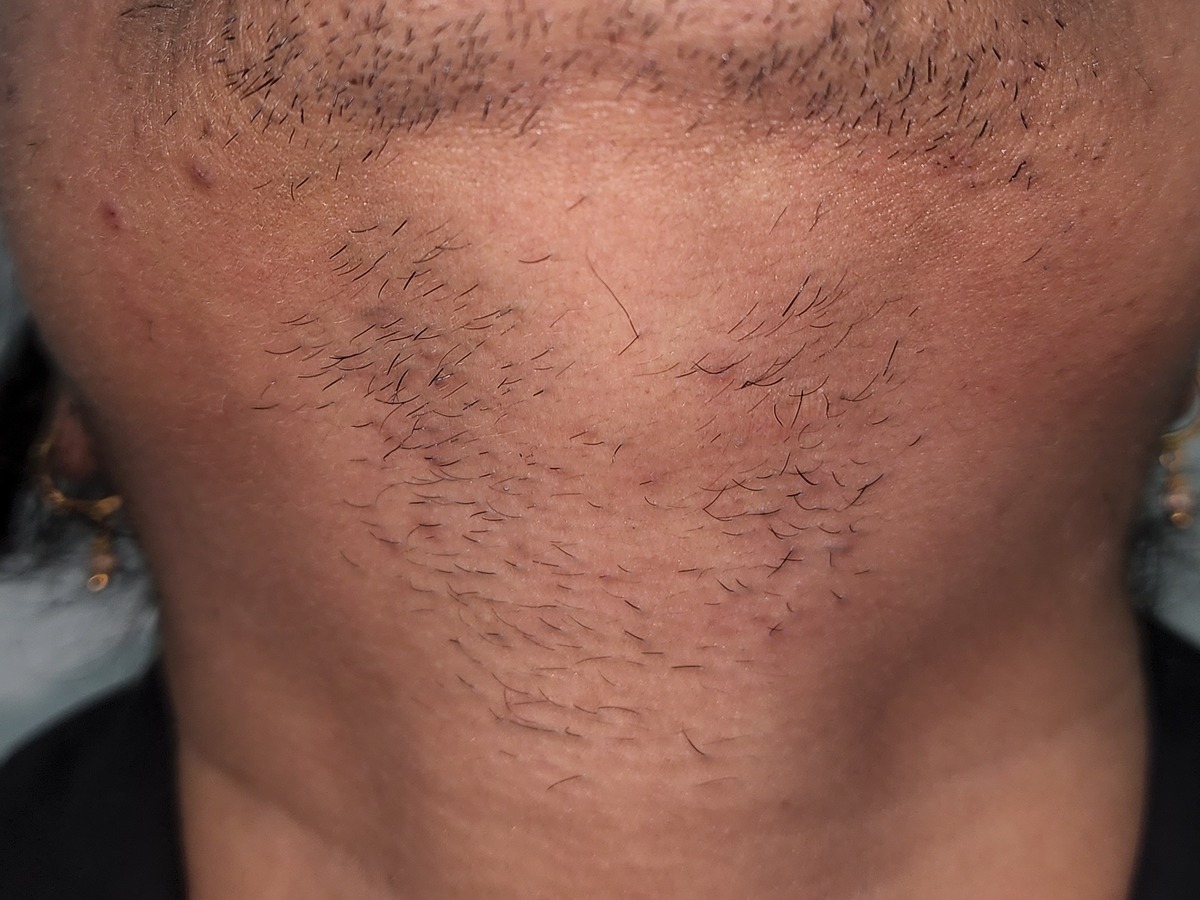
Photographs of patients treated at I·PLAST, published with their consent. Results vary from patient to patient.
Laser Hair Removal
Before and after laser hair removal.
Specialist: Dr. Seema Mittal
About this treatmentBefore
After

Laser Hair Removal
Before and after laser hair removal.
Specialist: Dr. Seema Mittal
About this treatmentBefore

After

Results vary between patients. These photographs show individual cases and cannot predict the result for anyone else.
Considering this treatment?
Book a consultation to find out whether it is suitable for you.
What to expect
From first visit to follow-up.
- 01
Consultation
Tell the doctor what concerns you and ask your questions.
- 02
Examination & Planning
The doctor examines you and explains the options, including their limits.
- 03
Treatment
Carried out only if it is suitable for you and you decide to go ahead.
- 04
Follow-Up
Check-ups after treatment to review healing and any next steps.
FAQs
Common questions.
This can only be decided after a consultation and examination. The doctor will go through your concern, your medical history and the options available.
The doctor asks about your concern and medical history, examines you, and discusses what you hope to change and whether treatment is advisable.
Dr. Seema Mittal sees patients for this treatment at I·PLAST.
Yes. If treatment is planned, the doctor will explain aftercare, any activity restrictions and the follow-up visits you will need.
Not necessarily. Results depend on your anatomy, the examination findings, your general health and the procedure. Photographs of other patients show their results only.