
Eye & Oculoplastic Surgery
Botulinum Toxin (Botox)
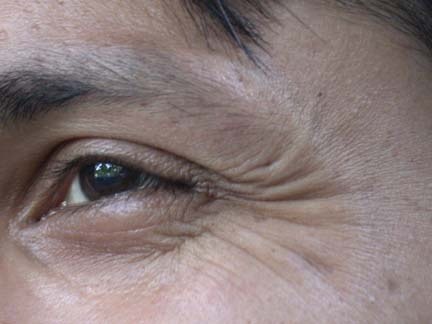
Botulinum toxin injections for frown lines and crow’s feet, and for eyelid and facial spasm.
Consult Dr. Raman Mittal ↗
 Illustrative image · not a patient result
Overview
About Botox
Botulinum toxin temporarily relaxes the muscle it is injected into. Around the eyes it is used for cosmetic lines, for eyelid spasm (blepharospasm) and hemifacial spasm, and sometimes to close the eye temporarily to protect it.
When to see a specialist
- 01Frown lines, forehead lines or crow’s feet
- 02Involuntary eyelid closing or twitching
- 03Spasm of one side of the face
Whether treatment is suitable can only be decided after a consultation and examination.

Your doctor
Dr. Raman Mittal
Ophthalmology • Oculoplastic Surgery
- MBBS
- DNB – Ophthalmology
- Fellowship in Oculoplasty
Ophthalmologist and oculoplastic surgeon. He treats problems of the eyelids, tear ducts, orbit and eye socket, including cosmetic and reconstructive surgery around the eye.
Your consultation
What happens at the consultation.
At the first visit the doctor listens to your concern, takes a medical history and examines you. Not everyone who comes for a consultation needs a procedure.
Treatment planning
How the plan is decided.
The doctor examines the face and eyelids, checks your medical history and medicines, and plans the injection points and dose for your concern.
- 01
Your anatomy
- 02
Examination findings
- 03
What you want to change
- 04
General health
In detail
Botox: what to know.
What botulinum toxin does
Botulinum toxin blocks the signal from a nerve to a muscle, so the injected muscle relaxes for a few months.
- Cosmetic uses: frown lines between the eyebrows, crow’s feet and forehead lines, and a small lift of the outer brow.
- Blepharospasm: involuntary closing of both eyelids.
- Hemifacial spasm: twitching of one side of the face, which may be caused by a blood vessel pressing on the facial nerve. A scan may be advised.
- Protective use: making an eyelid droop temporarily to protect the eye, for example in facial palsy.
Who should not have it
- People who are pregnant or breastfeeding.
- People with myasthenia gravis or similar nerve–muscle conditions, or who take certain antibiotics (aminoglycosides).
- Tell your doctor about all medicines, especially blood thinners.
The treatment
- A few small injections with a fine needle, usually around 5 to 10 minutes, with no anaesthetic needed.
- The effect starts within a few days, reaches its peak at about two weeks, and usually lasts about three to four months. Treatment is then repeated if needed.
- Afterwards, avoid rubbing the treated areas and strenuous exercise for a few hours.
Side effects
Most side effects are mild and wear off as the effect fades.
- Bruising or a headache.
- A drooping eyelid or brow, an uneven smile, dry or watering eyes, or double vision.
- Rarely, difficulty swallowing or breathing, which needs urgent medical help.
General information, checked against published guidance (September 2026). It does not replace an individual consultation; your doctor will advise on your own case.
Sources: EyeWiki (AAO): Cosmetic botulinum toxin · AAO: Eyelid spasm · Cambridge University Hospitals NHS · American Academy of Dermatology
What to expect
From first visit to follow-up.
- 01
Consultation
Tell the doctor what concerns you and ask your questions.
- 02
Examination & Planning
The doctor examines you and explains the options, including their limits.
- 03
Treatment
Carried out only if it is suitable for you and you decide to go ahead.
- 04
Follow-Up
Check-ups after treatment to review healing and any next steps.
FAQs
Common questions.
This can only be decided after a consultation and examination. The doctor will go through your concern, your medical history and the options available.
The doctor asks about your concern and medical history, examines you, and discusses what you hope to change and whether treatment is advisable.
Dr. Raman Mittal sees patients for this treatment at I·PLAST.
Yes. If treatment is planned, the doctor will explain aftercare, any activity restrictions and the follow-up visits you will need.
Not necessarily. Results depend on your anatomy, the examination findings, your general health and the procedure. Photographs of other patients show their results only.