
Eye & Oculoplastic Surgery
Contracted Socket Reconstruction
Reconstruction of an eye socket that has shrunk and can no longer hold an artificial eye comfortably.
Consult Dr. Raman Mittal ↗
View before & after photos Illustrative image · not a patient result
Overview
About Contracted Socket
A contracted socket has become too small or shallow to hold an artificial eye. It can be uncomfortable, and the prosthesis may not stay in place.
When to see a specialist
- 01Difficulty keeping an artificial eye in place
- 02Tightness or discomfort in the socket
- 03A referral for socket reconstruction
Whether treatment is suitable can only be decided after a consultation and examination.

Your doctor
Dr. Raman Mittal
Ophthalmology • Oculoplastic Surgery
- MBBS
- DNB – Ophthalmology
- Fellowship in Oculoplasty
Ophthalmologist and oculoplastic surgeon. He treats problems of the eyelids, tear ducts, orbit and eye socket, including cosmetic and reconstructive surgery around the eye.
Your consultation
What happens at the consultation.
At the first visit the doctor listens to your concern, takes a medical history and examines you. Not everyone who comes for a consultation needs a procedure.
Treatment planning
How the plan is decided.
The plan depends on the socket, the tissue available, any previous surgery and the prosthesis needed. Reconstruction may be carried out in stages.
- 01
Your anatomy
- 02
Examination findings
- 03
What you want to change
- 04
General health
In detail
Contracted socket: what to know.
What a contracted socket is
A contracted socket has shrunk so that it can no longer hold an artificial eye properly. It can develop weeks or years after an eye has been removed.
- Causes include radiotherapy, infection or inflammation, severe injury or chemical burns, not wearing an artificial eye for long periods, and repeated surgery.
- Signs include an artificial eye that falls out or cannot be worn, shallow pockets above and below the eye, and eyelids that roll inward or become loose.
How it is assessed
- The depth of the pockets above and below the socket, the health of its lining, how much volume has been lost, and the position of the eyelids.
- The contraction is graded from mild to severe, which guides the choice of operation.
Treatment options
- Mild: rearranging the existing tissue and tightening the eyelids.
- Moderate: a graft of lining tissue (mucous membrane) from inside the cheek, lip or roof of the mouth, or an amniotic membrane graft.
- Lost volume: a dermis-fat graft, usually taken from the abdomen, buttock or thigh.
- Severe cases may need several operations over months or years.
After surgery
- A clear shell (conformer) is placed in the socket, sometimes stitched in, to hold the new shape. In severe cases it stays in place for months before an artificial eye can be fitted.
- Follow-up is typically at one to two weeks and again at three to six weeks, then continues for months, or longer in severe cases.
Risks
Every operation carries some risk. Your doctor will go through the risks that apply to you before you decide.
- A graft can shrink after surgery, so further surgery is sometimes needed.
- Bleeding or infection. Infection is more likely after radiotherapy.
- Hair or oil growth from a skin graft, or a graft that does not take.
General information, checked against published guidance (September 2026). It does not replace an individual consultation; your doctor will advise on your own case.
Sources: EyeWiki (AAO): Contracted socket
Before & After
Contracted Socket Reconstruction Results
Photographs of patients treated at I·PLAST, published with their consent. Results vary from patient to patient.
Contracted Socket Reconstruction
Before surgery, 4 and 6 weeks after surgery, and with the custom prosthesis in place.
Specialist: Dr. Raman Mittal
About this treatmentBefore
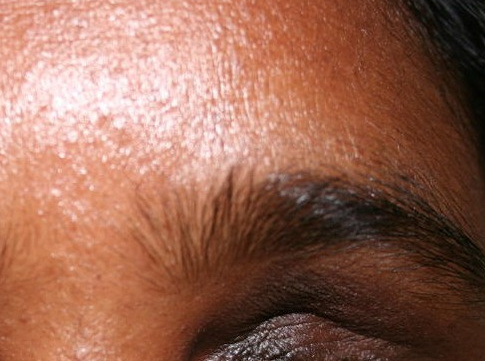
4 weeks after surgery (DFG well taken up)
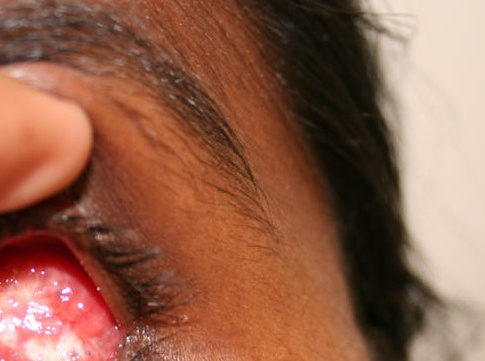
6 weeks after surgery
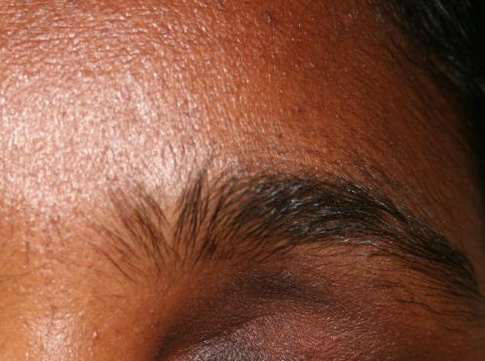
Custom prosthesis, well retained
Results vary between patients. These photographs show individual cases and cannot predict the result for anyone else.
Considering this treatment?
Book a consultation to find out whether it is suitable for you.
What to expect
From first visit to follow-up.
- 01
Consultation
Tell the doctor what concerns you and ask your questions.
- 02
Examination & Planning
The doctor examines you and explains the options, including their limits.
- 03
Treatment
Carried out only if it is suitable for you and you decide to go ahead.
- 04
Follow-Up
Check-ups after treatment to review healing and any next steps.
FAQs
Common questions.
This can only be decided after a consultation and examination. The doctor will go through your concern, your medical history and the options available.
The doctor asks about your concern and medical history, examines you, and discusses what you hope to change and whether treatment is advisable.
Dr. Raman Mittal sees patients for this treatment at I·PLAST.
Yes. If treatment is planned, the doctor will explain aftercare, any activity restrictions and the follow-up visits you will need.
Not necessarily. Results depend on your anatomy, the examination findings, your general health and the procedure. Photographs of other patients show their results only.